
Housing LIN recently featured a blog by the Almshouse Association Chair, Elizabeth Fathi.
Its an informative read with lots of really helpful links and references, as well as providing a real insight into the vision for the almshouse movement of the future. The blog can be accessed by clicking on the link below:
Almshouses – leading the way in the sustainable provision of low-cost homes and community
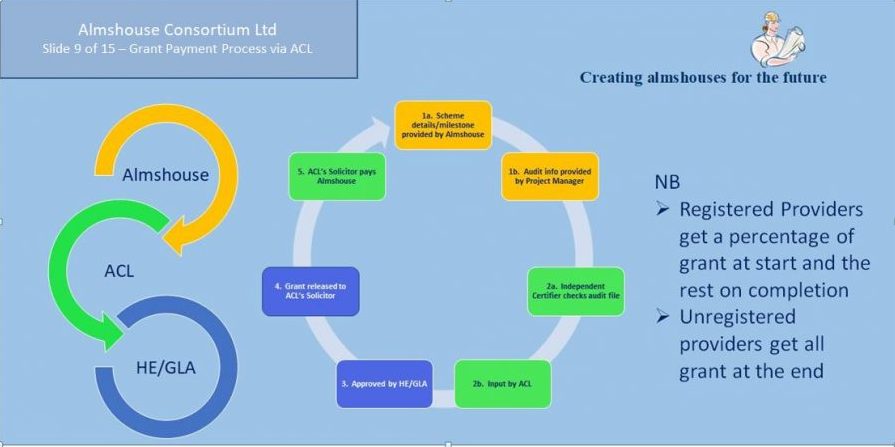
The Almshouse Consortium Ltd (ACL) held a Grant Funding Seminar Event in Birmingham on Tuesday 13th November 2018.
It was free to attend, with lunch and no obligation, and a number of charities took them up on their offer to find out more about how the ACL can assist their charity access government grants – for both new builds and remodelling. The ACL delivered an excellent presentation and were able to answer lots of questions and demonstrate to the charities how they will work directly alongside them and the individual almshouse to ensure they deliver a successful project.
The ACL has kindly provided the Association with a copy of the presentation. If you would like to learn more, please click here to download.
Note: The Almshouse Consortium Ltd is an independent company. It is important that members satisfy themselves that the services, qualifications and relevant membership of professional bodies meet their particular needs.
The Almshouse Association has submitted a response to the Government’s green paper ‘A new deal for social housing’ and an accompanying call for evidence on the review of social housing regulation.
Although the proposals in the paper will only affect registered providers, there may be implications for the wider membership.
The Association highlighted areas of best practice regarding health and well-being, the importance of local governance arrangements and that all almshouse charities should be classified as affordable housing for planning purposes.
The consultation responses can be found here.
Thank you to all members for their contributions and comments. We will keep you updated with progress.

On 14th August 2018, the government published the social housing green paper (A new deal for social housing). A consultation was launched alongside the paper and will run until the 6th November 2018.
Although the proposals in the paper will only affect registered providers, there may be implications for the wider membership – for example the proposed review of the Decent Homes Standard and the development of affordable homes.
For more details on the green paper, please refer to our previous news article – A New Deal for Social Housing
The Almshouse Association has composed a draft response to the consultation which can be found here.
Some almshouses charities may also wish to respond independently and may find our draft useful as a template.
Alternatively, please send any comments or suggestions to Chris Targowski, Assistant Director (Policy),Tel: 01344 452922 email: christargowski@almshouses.org
Deadline for feedback: 31st October 2018 – Closed
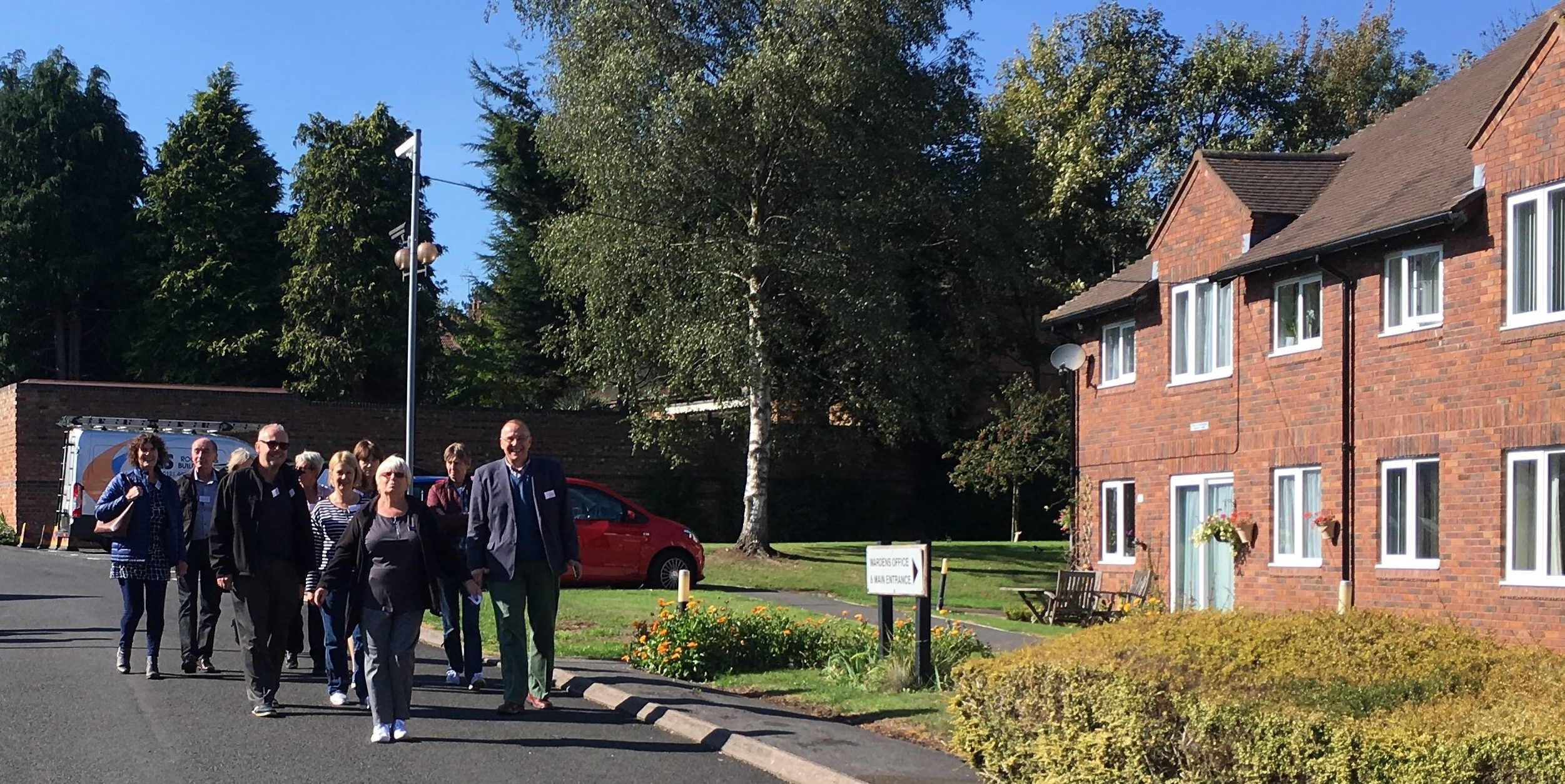
The Scheme Managers and Wardens Seminar on 25th September 2018 was very well attended and covered an array of interesting topics. One of these was ‘Understanding Mental Health Issues’ presented by Supt Sean Russell, Implementation Director, West Midlands Mental Health Commission. In follow-up, Sean has forwarded information to the Association about online CPD (Continued Professional Development) courses that are available, together with The Skills Network Level 2 Certificate in ‘Awareness of Mental Health Problems’. These can be accessed by clicking on the below:
 There was also an excellent talk given by Sherwin Criseno, Advanced Nurse Practitioner, University Hospitals, Birmingham on Osteoporosis and Brittle Bones. Sherwin had been unable to provide his PowerPoint in advance and many delegates were keen to have a copy. This can now be downloaded here
During the day there was some discussion about difficulties experienced by almshouse residents in claiming Housing Benefit. We have put the legislation pertaining to this topic in Latest News. Click here to access.

Following presentations on Universal Credit and Housing Benefit at the Scheme Manager/Wardens Seminar (Tuesday 25th September 2018), it became clear that some Local Authorities did not understand that the Weekly Maintenance Contribution equates to a rent (paid by a private tenant). This has led to problems with residents claiming Housing Benefit and Universal Credit.
The Almshouse Association will be highlighting this issue to both national and local government but should any Almshouse Charity face similar problems they should direct the Local Authority to:
The Housing Finance Act 1972 – ‘Extension of the Allowance Scheme to Almspeople’
This is quoted below:
“Regulations made under Section 19A of the 1972 Act. Joint Circular 107/75 Appointed Day
2. The Housing Rent and Subsidies Act 1975 (Allowances for Almspeople) Appointed Day Order 1975 (SI1975 No 1565) bring almspeople within the scope of allowances schemes on 17 November 1975.
3. Regulations which have been made under Section 19A of the 1972 Act (hereinafter referred to as “the regulations”) modify and adapt existing provisions of Part II and Schedules 3 and 4 of the Act, together with the various instruments (principally directions) made thereunder, so as to meet the special circumstances of almspeople.
4. The general modifications specified in Part 1 of Schedule 2 to the regulations relate to the substitution of terminology applicable to almspeople for that applicable to private tenants of rented accommodation (eg “almsperson” for “tenant”, “weekly maintenance contribution” for “weekly rent” etc). In some instances it has been necessary either to make more substantial alternations to the existing provisions or to disapply them specifically in relation to almspeople.”
In summary of the above, Weekly Maintenance Contributions required to be paid by an almsperson equates to a rent (paid by a private tenant).
We understand that all new applicants for Housing Benefit will now fall under the Universal Credit scheme and existing claimants will be migrated to Universal Credit over the next 5 years. There is a lot of useful information about Universal Credit at the following:
https://www.gov.uk/government/publications/universal-credit-and-you/universal-credit-and-you-a

Issue:
The government published the social housing green paper (A new deal for social housing) on the 14th August 2018. A consultation was launched alongside the paper and will run until the 6th November 2018. This briefing note summarises the paper.
Although the proposals in the paper will only affect registered providers, there may be implications for the wider membership – for example the proposed review of the Decent Homes Standard and the development of affordable homes.
Background:
The government defines social housing as housing to rent below market level rents or, to buy through schemes, such as shared ownership. Around 3.9 million households, approximately 9 million people, live in the social rented sector in England, just under a fifth of all households. It is estimated that around 14 per cent of social housing is supported housing. Supported housing is accommodation provided alongside support, to help people live independently.
The Government defines affordable housing as housing for sale or rent, including social housing, for those whose needs are not met by the market.
The green paper contains five principles:
- Ensuring homes are safe and decent.
- Reviewing the Decent Homes Standard. This has not been reviewed since 2006 and will be reviewed to consider whether it is demanding enough and delivers the right standards.
- Effective resolution of complaints.
- Residents should have a stronger voice to influence decisions and challenge their landlord to improve performance
- Strengthen the mediation opportunities available for landlords and residents to resolve disputes locally
- Review the ‘designated person’ arrangements
- Residents should be aware of all routes open to them to raise concerns and feel confident using them
- Ensure that landlords’ processes for dealing with complaints are fast and effective
- Empowering residents and strengthening the Regulator
- Arming residents with information on landlord performance
- Key performance indicators should be focused on issues of key importance to residents
- Consider a new stock transfer programme to promote the transfer of local authority housing particularly to community-based housing associations
- Helping housing associations and others develop more affordable homes
- Tackling stigma and celebrating thriving communities
- The design and quality of homes and their surrounding area is important to wellbeing, integration, tackling stigma and encouraging existing communities to accept new homes in their area.
- Expanding supply and supporting home ownership
- The level of new housing delivery from the community-led housing sector in England is much lower than in comparable countries
- Helping housing associations and others develop more affordable homes
Alongside the Green Paper, a Call for Evidence which seeks views on how the current regulatory framework is operating was published.
https://www.gov.uk/government/news/social-housing-green-paper-a-new-deal-for-social-housing
Next Steps
The Almshouse Association will respond to the consultation and will consult with members as appropriate.
For further information please contact Chris Targowski, Assistant Director (Policy),
Tel: 01344 452922 email: christargowski@almshouses.org
24 Sept 18

Nick Phillips has been forging a relationship with the National Association of Local Councils and writes to Ben Murray, Policy and Projects Officer:
I am delighted to have been offered the post as Chief Executive of the Almshouse Association – an organisation steeped in history, supporting 1600 member almshouse charities housing 35,000 residents.
One of my priorities has been to get in touch with NALC. I have always seen Town and Parish Councils as the main link to community led housing and often it’s the same people giving up their time to make things happen. The Almshouse Association is here to help promote the great value of almshouses, to encourage more to be built, to support those trustees and clerks who are running them and to gain recognition as the exemplar model for local housing in perpetuity.
I have always known almshouses for their architectural value and often distinctive design, but I have very quickly come to realise that they are more about people, local community and a proud history, than bricks and mortar. A recent study by one almshouse (Whitely Village), even suggests people can live years longer in almshouses. (The Almshouse Association is commissioning further research to find out more.)
If, like me, you listen to the radio in the morning, you may feel that there is a national crisis of affordable housing and loneliness having a real life impact on so many people. I can’t help feeling that almshouses are part of the solution. Whilst the origins of almshouse charities goes back in some cases to the Middle Ages, funded often through true philanthropy and enterprise, there is something in the spirit of almshouses that captures the best in community and localism today.
I hope to work with parish councils and town councils over the years supporting these great assets to our community and seeking opportunities for more to be built where there is a local need and interest.

Nick Phillips, CEO and Chris Targowski, Assistant Director (Policy) met with the Ministry of Housing Communities and Local Government (MHCLG) on 5th September 2018. The purpose of the meeting was to highlight the need for greater recognition of the value our members deliver to the community. Specific topics discussed were:
The Almshouse Association will be responding directly to the consultations above and will be asking for members views in due course. If any members have preliminary views please email: christargowski@almshouses.org
National Housing Federation Policy Meeting
The Almshouse Association has regular policy discussions with the National Housing Federation. On 5th September 2018, Chris Targowski, Assistant Director (Policy) met with the National Housing Federation to discuss some of the regulatory challenges facing the housing sector. Agenda items included:
Devonshires Solicitors have provided the Almshouse Association with an informative factsheet regarding the Heat Network (Metering and Billing) Regulations 2014 that you can download here.
As far as we are aware, there have been no changes to the Regulations since they came into force in 2015. The Almshouse Association will notify members of any updates in ‘Latest News’.