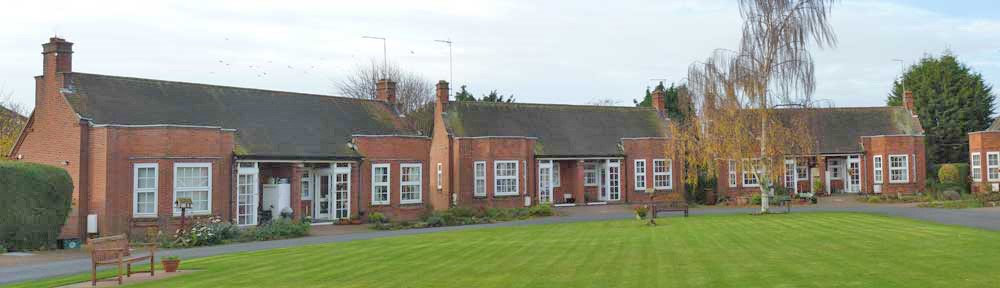
Who owns your charity land?

Many trustees of charities when asked who owns their charity’s land will reply by saying “the Charity”. However this can be a misleadingly simple response as the means by which charities own property do vary. 

Unincorporated Charities

With an unincorporated charity (where the charity does not in itself have a separate legal status) the owners of the charity property are the trustees, or should be. The trustees hold the assets of the charity upon the terms of the charitable trust for their charity to use the land or apply the income in accordance with the relevant trust deed, constitution or Charity Commission order but most of the time the legal ownership is with the trustees.  
There are some exceptions to this when, for example, the legal title to a property is vested in a nominee trustee, for example the Official Custodian for Charities or another custodian trustee as is commonly encountered with certain religious charities. However many charities, even some relatively large and wealthy charities still have their assets held collectively in the names of individual trustees.

Incorporated Charities

Where a charity has a separate legal status as an incorporated charity then the charity entity, whether it be a company limited by guarantee, a statutory corporation or a Charitable Incorporated Organisation will itself hold the assets of the charity in its name. Management of the charity’s property and affairs remains with the trustees but the legal title sits with the incorporated body. 

One of the key advantages of a charity being incorporated is that there is no need to monitor and update from time to time the Land Registry records of property ownership of the charity to reflect changes in the composition of the trustees.  

Problems with land ownership for unincorporated charities

A trustee’s status may come to an end as a result of death, loss of mental capacity, bankruptcy, expulsion, retirement, expiry of a fixed term or loss of position qualifying them to be an ex-officio trustee, depending on the nature of the circumstances and the terms of the charitable trusts and applicable statutory regulations.  Likewise new charity trustees can be appointed by a decision of the trustees or simply become trustees as a result of their status (an ex-officio role) eg if one of the trustees is required to be the local vicar or a representative of a local council.  

Where a charity is unincorporated it is often easy to fail to keep up to date the records of the trusteeship so as to ensure that the public records (held by the Land Registry) of ownership of the charity’s property reflect the current trusteeship of the charity.  

Simply recording a change of trustees in the minutes of trustees meetings is not enough. Nor is updating the records at the Charity Commission.

Unfortunately we have seen too many cases recently where Land Registry records of ownership have been overlooked when trustees have died or retired and when new trustees are appointed.  In one extreme case all but one of six registered charity trustees had died or ceased to be involved with the management of the charity and in another even more awkward case, none of the registered owners of the property were still in office.

What does it mean for charities if land registry records are out of date?

There are problems for a charity should it need to deal in any way with its property, with both increased cost and delay likely. The time and expense involved in retrospectively updating records of trusteeship at the Land Registry can be significant and may prejudice transactions by the charity, whether this is the sale or lease of a property or obtaining a mortgage. Income may be lost or much needed capital receipts may be delayed. The longer it goes on the messier it gets.

Similarly this can cause difficulties in dealing with the statutory processes to incorporate the charity where the charity’s assets have to be vested in the new Charitable Incorporated Organisation.

Charity trustees have obligations to ensure that charity property (as with all other assets) is maintained under their control.  Allowing Land Registry records to become out of date may in extreme cases be considered a breach of trustees’ duties and may give rise to personal liability for losses suffered by the charity.

Practical steps to keep up to date with changes of trustees

  • Obtain a copy of the death certificate of a trustee who dies
  • Follow carefully the procedures for recording the documenting the retirement of trustees set out in the Charity’s trust deed or Scheme or other constitutional documents. 
  • If a trustee is to be removed from office for misconduct, insolvency or failing to fulfil their duties, again ensure the proper process is adhered to.
  • Minutes of trustees meetings should properly record all changes both incoming and departed/departing trustees with reference being made to the appropriate powers under the Charity’ constitution or trust deed.
  • In all of the above cases, ensure that the relevant documents are lodged at the Land Registry – legal advice may be needed. This may take the form of a standard Land Registry TR1 or a Deed of Retirement/Appointment or a Memorandum under section 334 of the Charities Act 2011.
  • Periodically review whether the Land Registry records are up to date, for example by adding such a review as a task when making the usual annual returns to the Charity Commission.

Land registry process

The Land Registry will not treat a transfer of registered land upon appointment or retirement of a trustee as a “disposition” and therefore no special procedures are needed to address the standard restrictions which are imposed on registered titles of charity land requiring compliance with the relevant provisions of the Charities Act 2011 (or other regulating statute) dealing with transfers of land.  So, for example, no surveyor’s valuation is needed.

Where charity land is not registered at the Land Registry then a change of trusteeship will trigger an obligation to register the title.  As the number of areas of unregistered land reduces over time, first registration of previously unregistered land is an increasingly specialist area of conveyancing practice so legal advisers need to be chosen carefully. 

Register your charity land if not done already

It is recommended as good practice for charity trustees to register title to their property voluntarily in any event. Registration carries with it a State guarantee of ownership, boundaries and rights over property can be clarified, there is significantly more protection against squatters’ claims and additional measures can be taken to be alerted to potential property fraud.  

Conclusion 

The overall message is for trustees and others to whom the task of administration is delegated, whether it be a Clerk to the Trustees, Committee Secretary or a reluctant volunteer from the committee is to remain vigilant and ensure that the formalities of Land Registry processes are properly followed and dealt with promptly whenever a change of trustee occurs. 

If in doubt take legal advice early as it will certainly cost more to sort it out later.

Information supplied by Derek Ching, Partner at legal firm, Boyes Turner LLP.

Posted 12 Feb 21 


Govt responds to almshouse question in House of Lords

Government Minister Lord Greenhalgh has responded to a question on almshouses raised by Almshouse Association Ambassador Baroness Joan Bakewell.

In his response Lord Greenhalgh noted:

“The definition of ‘Affordable Housing for Rent’ in the Government’s National Planning Policy Framework requires in most cases that the landlord of the accommodation will be a registered provider of social housing – that is to say, registered with the Regulator of Social Housing…Local planning authorities are free to decide that almshouse accommodation, rather than affordable housing, is a more appropriate form of accommodation to require through planning obligations.”

The definition of affordable housing in line with the National Planning Policy Framework is an issue which the Association is working to change. We believe that the definition has a detrimental effect on smaller almshouse charities who may like to expand, but do not want to go through the arduous registration process.

We thank Baroness Bakewell again for raising the question and for her continued support of our work.

Posted 15 February 21


Covid-19 vaccine update

The Almshouse Association is now aware that for the next 2 weeks, eligible frontline care workers can access their first Coronavirus vaccination via the National Booking Service. The Service allows individuals to book at a time and location which is convenient to them.

The guidance we have received notes:

“As with the current process, social care workers can access their vaccination appointment with a Local Authority-issued Notice of Eligibility. They can now also use a recent letter from their employer, along with photo identification which confirms their place of work. For those who do not have a work photo ID, as a minimum, a letter from their employer with another form of photo ID will be needed. Frontline social care workers should also be encouraged to inform their employers of their vaccination to enable this to be included in data returns to help us target support where needed.”

If you or your colleagues are eligible to be considered at this stage this link may be useful.

Posted 15 Feb 21


Policy & Governance update: February 21

Each month, the Association posts a news summary of the latest Policy and Governance legislation that could impact / requires action from our member charities, with links to further information where applicable. Please find below our Jan/Feb 21 Summary.

Ministry of Housing, Communities and Local Government

Renters could be evicted for arrears built up during pandemic under legislation tweak – The Government has tweaked regulations to remove protection for tenants falling behind on rent as a result of the crisis for the first time. Previous legislation carried a provision that eviction notices could be served only for arrears where the amount owed to the landlord totalled equivalent to nine months’ rent and that any unpaid rent arrears accrued after 23 March 2020 must be disregarded. The new regulations (already in effect) lowers the arrears threshold to six months’ rent and removes any reference to disregarding debt built up during the pandemic.

Energy and Environment

The Future Buildings Standard – MHCLG has published a consultation – closing 13 April – on changes to Part L (conservation of fuel and power) and Part F (ventilation) of the Building Regulations for non-domestic buildings and dwellings; and overheating in new residential buildings. It has also published related guidance for Approved Document L (conservation of fuel and power), Approved Document F (ventilation) and Overheating. Members may be interested in responding to the suggestions for new residential buildings.

Coronavirus

You can find all our Coronavirus updates here

Previous Policy and Governance updates:
Policy and Governance update – January 2021 Summary
Policy & Governance update – December 2020 Summary
Policy and Governance – October 2020 Summary
Policy and Governance – September 2020 Summary
Policy and Governance – July/August 2020 Summary
Policy and Governance – June 2020 Summary
Policy and Governance – May 2020 Summary
Policy and Governance – Apr 2020 Summary
Policy and Governance – Mar 2020 Summary
Policy and Governance – Feb 2020 Summary
Policy and Governance –Jan 2020 Summary
Policy and Governance – 2019 Summary

Posted 10 February 21


A SPECIAL CELEBRATION

The Almshouse Association’s 75th Anniversary Year

It’s now official! 

As 2021 starts a fresh New Year, we are celebrating our 75th Anniversary and we are delighted to be sharing this special milestone with you all.

It’s our opportunity to get to know you better and for us all to join together and celebrate your achievements and your dedication to the Almshouse Movement too.

It seems that it is now more vital than ever to raise the profile of the many tangible benefits that your almshouses bring to your local communities, and the heritage that you are preserving for future generations. Our recent YouGov survey revealed just how few people really know about almshouses. We want to change that!

Throughout 2021, we are planning a focused approach to our marketing and PR activities. We will be campaigning heavily in Parliament to generate more support for the Almshouse Movement and will be looking at opportunities to generate more local and national press coverage. We will also be seeking ways to engage local councils to help them build more of an understanding of almshouses.

We want this 75th anniversary year to see us working more closely with you to support your needs even more and assure you of our integrity and professionalism at all times.

We relish the thought of visiting some of your planned garden party events, if possible.  Your events will be part of our ‘Open Garden Campaign’ starting in early summer and running through to the early autumn months. We are truly delighted to have received so many requests from you for our Celebratory Packs.

These will be winding their way to you from early March and include lots of hints and tips to help your day run a little easier, whether you are planning an onsite party at your almshouses or participating in an off-site event. Whatever you are hoping to organise, we want to help make your day special so please call us if you need any extra support during this time.

Our own garden party event is in the initial stages of being organised and is planned for late summer. More details of this will follow in due course!

All these events will really highlight your fantastic work and help us all celebrate your achievements within your local community.

As well as helping you celebrate your achievements, your almshouse garden parties and/or local events you plan to participate in could also help you to expand your networks and encourage more local support, including trustee recruitment.

Getting local/regional/national media coverage could lead to more financial and practical assistance for your charity so, where possible, we will try to get the local press involved. Increased local awareness could help you towards providing longer term maintenance of your almshouses and fulfilment of vacancies. Your Celebration Pack will include some flyers on how to involve and manage local journalists and local radio .

If you would like to have a chat about any proposed activity you are considering, please contact our Campaign Manager,  Gerry Harmon on gerryharmon@almshouses.org or call our office number, 01344 452922.

We look forward to working with you during this celebratory year!

#SupportAlmshouses

Posted 28 January 21


HAPPI Hour: Almshouses

Almshouse Association takes part in Housing LIN’s HAPPI Hour on Almshouses

The Almshouse Association was pleased to take part in a lively discussion on almshouses at an event hosted by Housing LIN.

The event, The future role for Almshouses in shaping local communities, also saw contributions from Almshouse Association members, architects and researcher Allison Pooley who helped to write the recent RICs report on almshouses.

We were proud to see such a vibrant conversation from both panellists and the audience, clearly showing the level of interest that almshouses can garner. There was clearly so much interest in the development of the almshouse model that we ran out of time. I am sure we will have an opportunity to revisit the discussion in the future but do let us know of any specific area of interest.

In the meantime, please do watch the session here if you were unable to participate.

Posted 1 Feb 21


House of Lords: Almshouses raised again

Almshouses raised again in the House of Lords

The Almshouse Association would like to express its thanks to Baroness Joan Bakewell DBE, HonFBA, FRSA for raising a question in the House of Lords regarding Section 106 agreements.

Although Baroness Bakewell, who is also an Almshouse Association Ambassador, did not receive an immediate answer, we look forward to hearing from the Government on the points she raised.

We are proud to see our engagement efforts beginning to bear fruit with an aim to see almshouses regularly mentioned in Parliament. You can help us in this effort by reaching out to your MP who can reach out to The Almshouse Association to support our work and that of the movement. You can also invite them to join the APPG on Almshouses which has its first meeting on February 4th.

Baroness Bakewell’s question can be viewed here

Posted 26 January 21


The Almshouse Association is 75 years old!

2021 is the year we celebrate our 75th Anniversary of supporting and representing almshouse charities.

By support, we mean offering advice, guidance, grants and loans to almshouse charities to ensure the delivery of an exemplar housing model that has stood the test of time for over a 1000 years and continues to provide value and efficiency in its delivery of local affordable community housing for people in housing need.

Our 75th anniversary provides us with the wonderful opportunity to join together with our member charities and celebrate their achievements and dedication to the Almshouse Movement.

‘In a recent YouGov Survey* new figures show that eight out of ten people (84%) are not aware of any almshouses in their local area and identified that over 68% of people do not know what an almshouse is.’

YouGov Nov 20

It’s now more vital than ever to raise the profile of the many tangible benefits that almshouses bring to local communities and the heritage that our member charities are helping preserve for future generations.

Almshouses add to the warmth of a community, a ‘community spirit’ that offers safety and security and make it possible for residents to continue to live independently yet still close to familiar surroundings. They provide a place for social interaction but also privacy.

To commemorate our 75th Anniversary year we will be shouting about our 1600+ member charities and the wonderful work they do. We are inspired on a daily basis by the commitment, dedication and tenacity of our members and the passion they have for their almshouse’s and the residents they support.

Throughout 2021, we will be campaigning heavily in Parliament to generate more support for the Almshouse Movement and will look at opportunities to generate more local and national press coverage, with press interviews taking place at chosen regional sites.

Our member charities will be holding local events in celebration of their achievements and the role their almshouses have played in supporting local people in housing need. The ‘Open Garden Campaign’ starts in early summer 2021 and will run all the way through to the early autumn months. Residents will be baking cakes and sharing their delights with their local communities in recognition of the Almshouse Movement. Watch out for invitations being displayed in your local shops and businesses and on social media sites and join them in their celebrations.

There is so much history and inspiration surrounding almshouses, and the story of this 1000 year old affordable housing model needs to be told boldy and proudly. Join us and enjoy learning more about almshouses and the passion behind this amazing housing model that is a secret about to be told.

Please support us!

There are over 30,000 almshouses across the UK and many are in the process of refurbishment and/or redevelopment. We also have an aim to create over 5,000 more almshouses in the next ten years.  The demand is there but we can’t do this without your help. 

The Almshouse Association offers grants and loans to member charities who need the financial support to create the warm and secure homes their residents deserve. We need your  support to help them continue to refurbish/redevelop their almshouses to achieve the exemplar standard that we all want to achieve.

We also need the support to build new, state of the art almshouses that use eco-friendly building methods. This will future-proof almshouses to ensure they can continue to provide affordable homes for local people in housing need.

Please help us raise the awareness of the wonder of almshouses and the importance of this affordable community housing model by perhaps holding your own garden party in aid of your local almshouses, or connect with us or your local almshouse charity on social media. You can even use our new hashtag !

#SupportAlmshouses

If you would like to know where your nearest almshouse charity is, or would like to know more about how you can help join us to celebrate our 75th Anniversary year, please contact us at our office in Wokingham and we would be happy to talk to you!

Join us and celebrate the spirit of almshouses!

*All figures, unless otherwise stated are from YouGov Plc. Total sample size was 2001 adults. Fieldwork was undertaken between18-19th November 2020.  The survey was carried out online. The figures have been weighted and are representative of all GB adults (aged 18+)

Posted 26 January 21


PR Tips and Advice

One of the objectives of The Almshouse Association 5 year strategy is to raise the profile of almshouses. A big part doing this involves speaking to the press, being interviewed for statements and publishing news and stories about almshouses and the almshouse movement. It goes without saying that everyone wants positive PR and wants to avoid bad PR, but this is not always something we can control.

When dealing with any enquiries from newspapers, broadcast press (including radio and TV stations), journalists and press relations personnel, there is always a potential for them to ask awkward questions or ‘dig’ for more information. We may not want this information in the public domain without consultation with our Press Relations Agency (PR) and/or our Chair/CEO.

It is not a case of shying away from challenging questions, but there are a number of ways to put across a message without encouraging ‘negative press’.

Over the next 12 months, as the Association works on a Public Relations Campaign to raise the awareness of the Almshouse Movement and The Almshouse Association, more people will learn about our purpose and work, and almshouses in general.  We hope that we will receive a lot of interest from the press, however, it would be naïve to think that this would all be about the 75th Anniversary. Some journalists may also want to ask more challenging questions. They may contact the Association or they may contact almshouse charities directly.

The Almshouse Association is here to help you. We will be very happy for you to refer any journalists to us so that we can support you.

We have put together some guidelines that you may find useful and will help protect the integrity of your almshouse charity and the almshouse movement.

Guidelines

  1. Overview
    Whilst our flow of information to the media will always be positive, with greater recognition comes greater scrutiny and the need for a strategy to handle criticism or negativity. It is important that any negative questions or comments are dealt with promptly. It is sometimes tempting to hope that a problem will go away or you may feel it is too small to create interest. With the media, a negative story can get out of hand in minutes and a reputation can be destroyed. This is particularly relevant in these days of social media. Re-building trust and confidence can take a long time so we recommend treating every potential negative story as a matter of importance. It may disappear but if you are prepared for the next step you will never be on the back foot.

    Please, therefore, alert your designated media contact about anything that you are not comfortable with as soon as possible and please contact the Association if you need any help.  

  2. Designated Media Contact
    At The Almshouse Association, the Chief Executive, Nick Phillips, has overall responsibility for media issues and will approve all internal material before it is sent to any media, or, he will designate an alternative manager at times of his absence. Similarly all media calls to your charity should be directed to the Chief Executive in the first instance, or a designated alternative manager, at times of the Chief Executive’s absence.

  3. Your Chief Executive or designated member of staff:
    • will need to ensure that relevant trustees and employees are briefed on any media enquiry that might impact on the them
    • will manage the media, together with the Chief Executive of The Almshouse Association if needed and applicable, in the event of an incident occurring
    • will decide on the appropriate media position to take with a relevant trustee or an employee, volunteer or supported person in their care, to ensure the right communication is given to the press
    • may choose to liaise with the Chief Executive of The Almshouse Association to assist with any news releases, proactive and reactive media statements; comments or quotes, answers to media enquiries, social tweets or similar.
    • will approve any social and website media copy
    • will be responsible for issuing a holding statement (if necessary) before immediately responding to an incident that has attracted press interest.
  4. Procedure for handling media enquiries – Anyone receiving an enquiry from the media:
    • will need to ask the journalist the nature of the enquiry and when they need the information by
    • should, if applicable, explain that they are not the best person to deal with the request but they will refer the journalist to the CEO or designated manager immediately
    • must make sure they take the name, number and/or email address of the caller
    • need to be friendly and helpful but remain polite and firm
    • should not feel pressured into a conversation they might regret.
  5. ‘Door-Stepping’
    In the event of an immediate breaking news story, journalists can ‘door-step’ a junior person who can be caught unaware. The words ‘no comment’ can be interpreted negatively so it is best for the junior member of staff to reassure the journalist that every effort will be made to ensure someone will be in contact with them as soon as possible. The CEO/designated member of staff must then be alerted without delay.

  6. Social Media
    Dealing with online media through platforms such as Twitter needs to be handled with special care because a negative comment can spiral out of control instantly.  The Almshouse Association Social Media Policy template sets out guidelines for responsible use and can be found on our website in Policies and Procedures.

  7. Confidentiality
    All trustees and employees have a duty of confidentiality to their residents. Unauthorised disclosure of personal information about them, or about matters relating to them, could result in a complaint to the Charity Commission. Please be mindful of this.

Please click in the links if you would like to access our Media Handling Policy and Media Handling Procedures templates. and please do not hesitate to contact us if you need our assistance, we are here to help.

Posted 21 January 2021


Overnight visitors

The Association has received a number of enquiries from members concerning managing residents’ expectations with regards to overnight visitors and dealing with overnight visitors that have outstayed their welcome.  

We asked an experienced solicitor for their comments on the subject. Alison Maclennan of Third Sector Law writes:

The issue of overnight visitors staying in almshouse accommodation can become a real issue for almshouse trustees. Of overriding importance is knowing who is on site overnight in case of emergency. Imagine two scenarios: a fire alarm is triggered, evacuation of permanent residents is complete and a head count tallies with known occupants. A resident then becomes alarmed as Mr and or Mrs Smith had their son to stay and no one has seen him. Alternatively, a fire alarm is triggered and all the expected residents appear but there are a further eight people in the head count. In both scenarios the real issue is that unless the managers know who is on site there is uncertainty as to whether everyone is safe. This reason alone is justification for Trustees to have (and adhere to) a policy on overnight visitors.

The next consideration is what that policy should contain. This is a practical issue which can vary widely depending on the nature of the accommodation on offer to residents, but also each and every almshouse may have widely varying resident profiles making it more or less likely that overnight visitors are frequent.

Some almshouses may have the luxury of visitor accommodation on site for residents’ family and friends.  If so, a modest charge can be made for overnight stays and visitors can be asked to sign T&Cs similar to those used by hotels. This ensures that long stays are avoided.

Boomerangs, Cuckoos and Romeos

Having children is great, they are a real support sometimes. However, the range of familial relationships is such that this can be a problem at times. A resident’s problem child can be a problem for the Trustees too. If an almshouse takes residents in their 50s they can have “Generation X” or “millennial” children who sometimes appeal to their parents for help. Unemployed, homeless children with undesirable “friends” can turn up on the doorstep. Their parents may find it difficult to turn them away and the Trustees may be pressurised into allowing them to stay. A temporary shelter can easily turn into unauthorised occupation by non-beneficiaries. The relationship may be such that these boomerang children (who always come back) can intimidate their parent(s) and within weeks the problem can be exacerbated by an accumulation of arears of WMC. Unless the resident can be supported to move their children and associates on, the inevitable result is that a claim for possession will have to be made against both the resident and their children. Of course it is not only children but other relatives too who suffer.

Sometimes the “visitor” is not related but may be exploiting a vulnerable resident. These are the “cuckoos” who may move in with a vulnerable person and begin exploiting them financially and emotionally. This is becoming more common. The Trustees face a stark choice. Again a possession action can be taken against all the occupants including the vulnerable resident, but this seems to be difficult to reconcile with the objects of the charity to help those in need. Every effort should be taken to try and involve social services and Trustees can raise a safeguarding issue with that department. The response from social services may be variable depending on the local authority concerned.

Finally, the Romeos. Residents may form relationships with others. Whether this is a friendship or something more akin to cohabitation, this often occurs. This is a relatively easy problem to solve if the persistent overnight visitor would also qualify as a beneficiary. The couple can be acknowledged and the resident and their partner may be able to be moved to suitable accommodation on site.

All three categories can be difficult to deal with but the number of possible scenarios cannot be underestimated. Grandparents may wish to babysit their grandchildren overnight. This is not recommended as almshouse accommodation is rarely suitable for children. Residents should be encouraged to undertake babysitting at their children’s homes.

The standard scheme provisions is that overnight visitors should have the consent of the Trustees to stay. Trustees need to find the right balance for their own residents within the confines of the actual accommodation they have. If the Trustees are open minded, a resident will be less likely to have unauthorised overnight visitors. If communication remains open it is also likely that the charity’s managers or Trustees can spot a boomerang, cuckoo or Romeo coming their way.

Overnight visitors are not beneficiaries and as such are not included in the charity’s objects, so the best strategy is to plan ahead, develop clear policies and communicate with residents so everyone knows the charities policy on this complex matter well in advance of the problem.

Alison Maclennan |Third Sector Law
a.maclennan@thirdsectorlaw.co.uk

Posted 19 January 21